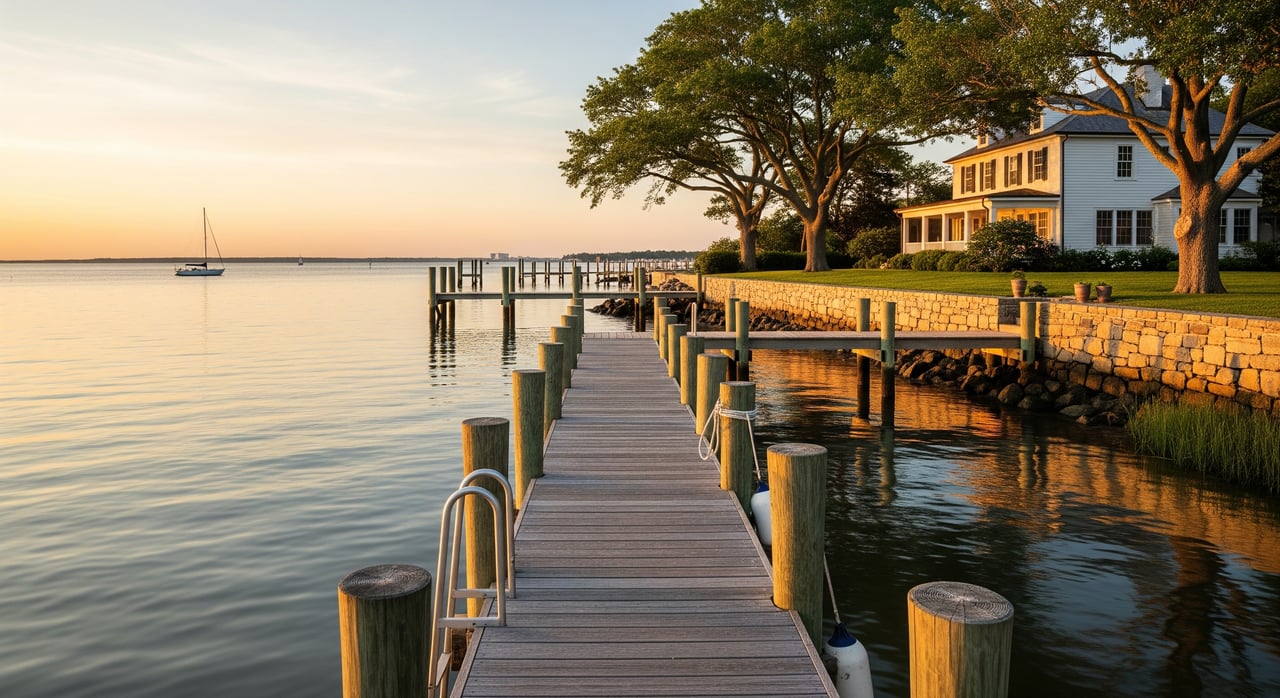
Picture this: you step from your backyard to your boat for a morning cruise on the Severn. That dream is real for many Annapolis buyers, but the rules at the water’s edge are not always simple. If you are considering a waterfront home, understanding riparian rights can save you time, money, and stress. This guide explains what those rights mean in Annapolis, how mean high water works, how permits affect docks and moorings, and a clear checklist to follow before you make an offer. Let’s dive in.
Riparian rights in Annapolis
Riparian rights are the privileges that come with property touching a waterway, including access to the water and reasonable use. In Maryland’s tidal waters, including the Severn River and local creeks, these rights are limited by the public trust. The state typically owns the submerged lands and water surface below the mean high water line, so private rights do not override public navigation or fishing.
The practical takeaway for buyers is simple. Waterfront ownership gives you access and potential use, but it does not automatically grant the right to build any structure or control the water. Your use is subject to permits and to environmental protections.
Mean high water, made simple
The mean high water (MHW) line is the legal shoreline for most tidal properties in Maryland. It is the average of high tides over a long period, not the highest splash mark you see after a storm. Everything seaward of MHW is usually state‑owned submerged land.
Because MHW is technical, rely on a current survey prepared by a licensed surveyor. Older plats may use different tidal data or show outdated boundaries. If a survey is missing, plan to order one before closing and verify where existing structures sit relative to MHW.
What you can build and where
Your ability to build or replace a pier, floating dock, or boat lift depends on location and environmental impact. Size, distance from shore, water depth, and shading of submerged vegetation can all affect approval. Even small structures often require tidal permits and local review.
Moorings and buoys are typically managed by local harbor authorities. Placement, assignments, and fees can differ between the City of Annapolis and Anne Arundel County. Shoreline stabilization, such as bulkheads, revetments, or seawalls, usually needs permits and may require mitigation if wetlands would be affected.
Dredging invites higher scrutiny and can trigger federal, state, and local approvals. Expect longer timelines and potential conditions or mitigation.
Permits and who to contact
Most tidal projects involve multiple agencies:
- Maryland Department of the Environment for wetlands and waterways permits.
- Maryland Department of Natural Resources, including the Critical Area program, for shoreline and habitat consistency.
- U.S. Army Corps of Engineers for structures in navigable waters and for dredge or fill activities.
- Anne Arundel County or the City of Annapolis for local building, zoning, and harbor rules.
If the property sits inside city limits, Annapolis has a Harbormaster and municipal harbor regulations. Elsewhere, Anne Arundel County processes local permits. Simple projects may take weeks, while larger ones can take months, especially if public notice or environmental review is required. Older piers may be effectively grandfathered, but replacement or enlargement can trigger modern standards.
Pre‑offer verification checklist
Follow these steps before you write an offer on an Annapolis waterfront home:
- Title and deed
- Request the deed and any recorded plats from the seller. Look for language that references riparian rights, easements, or pier agreements.
- Search public land records and SDAT for easements, covenants, HOA rules, or pier leases tied to the parcel.
- Survey and MHW line
- Obtain a recent licensed survey that shows the mean high water line and all waterfront structures.
- Confirm whether a pier or dock crosses MHW and extends over state‑owned submerged land.
- Existing permits
- Ask for copies of all permits for the pier, mooring, bulkhead, or dredging. Confirm whether they are current and transferable.
- Contact the appropriate local office, county or city, to verify permit status and whether the structure is on file.
- Environmental and Critical Area
- Check whether the parcel is in the Critical Area and what buffers or mitigation apply.
- Review maps for wetlands and submerged aquatic vegetation to understand potential constraints.
- Moorings and shared facilities
- If a community pier or mooring is involved, get HOA documents. Confirm slip ownership, assignments, waiting lists, rules, and fees in writing.
- Call the appropriate harbormaster to ask about mooring field practices and availability.
- Maintenance and liability
- Determine who pays for pier or bulkhead maintenance. Request recent invoices, assessments, or reserve studies if shared.
- Ask about nearby channels or dredging that could affect access or depth.
- Professional review
- Engage a Maryland real estate attorney experienced in waterfront conveyances to review deeds, easements, and permit transfer.
- Order a licensed survey and consider a marine contractor’s feasibility assessment for repairs or replacements.
- If planning shoreline stabilization, consult a coastal engineer early.
- Offer protections
- Include contingencies for survey, permit verification, and riparian rights review. Allow enough time to contact agencies and obtain documents.
City versus county differences
Within the City of Annapolis, municipal harbor rules and the Harbormaster may govern moorings and some in‑water use. Outside the city, Anne Arundel County handles local permits and enforcement. Always confirm which jurisdiction applies to your parcel and follow that office’s procedures and timelines.
Common pitfalls to avoid
- Assuming ownership of submerged land. In tidal areas, the state usually owns the seabed. Your rights are use privileges subject to permits.
- Relying on a decades‑old pier as proof of entitlement. Rebuilding or enlarging may trigger current standards and new approvals.
- Counting on an informal mooring arrangement. Harbor practices can change. Get written confirmation of assignments, rules, and fees.
- Skipping the survey. Without a current MHW line, you do not know where the legal shoreline sits or how a structure relates to it.
Smart offer strategy
Treat riparian rights as a due‑diligence item, just like inspections. Build in time to collect permits, confirm Critical Area status, and speak with the correct local office. If a private dock or lift is essential to your use, make that clear in your contingencies and plan your timeline around realistic permit durations.
Work with a local advisor
Annapolis waterfront neighborhoods vary by depth, exposure, harbor rules, and community facilities. A local specialist can help you read the shoreline, interpret surveys, and navigate agency processes. If you are aiming for a turnkey boating setup, align your search and offer strategy with what is actually permitted on that parcel.
Ready to chart a clear path to the water? Reach out to Liz Dooner for local guidance and a confident, streamlined purchase.
FAQs
What are riparian rights for Annapolis buyers?
- They are access and use privileges that come with waterfront property, limited by Maryland’s public trust and by state and local permits.
How does mean high water affect my boundary?
- For tidal properties, the mean high water line is the legal shoreline; a current licensed survey is the reliable way to locate it.
Do I automatically get to build a private dock?
- No. A dock usually requires permits and may be limited by navigation, environmental protections, and Critical Area rules.
Who owns the bottom under and beyond my pier?
- In tidal waters, the state typically holds title to submerged lands; you may have permitted use, not ownership.
Are city and county rules the same in Annapolis?
- No. The City of Annapolis has its own harbor regulations and Harbormaster. Properties outside the city follow Anne Arundel County procedures.
If a pier is already there, is it transferable?
- Not automatically. Verify permits, expiration dates, and any conditions. Unpermitted structures may need modification or removal.
What should I check for community piers or moorings?
- Review HOA documents for access rights, maintenance obligations, and slip assignments, and confirm any waiting lists and fees in writing.