If you love the idea of strolling to coffee, dinner, waterfront views, or a weekend event, Annapolis is one of the few places in the region where that lifestyle can feel genuinely practical. In the city’s central neighborhoods, you can often handle daily routines on foot, use transit for some trips, and keep a car for the moments you truly need it. If you are thinking about buying in town, understanding where that rhythm works best can help you find a home that fits how you want to live. Let’s dive in.
Why car-light living works in Annapolis
Annapolis is small enough to make a car-light routine realistic, especially near the historic core. The Census estimates the city’s 2024 population at 40,689 across just 7.21 square miles, and the City describes downtown itself as a one-square-mile National Historic Landmark.
That compact footprint matters in everyday life. The City’s 2040 Comprehensive Plan also highlights active transportation and neighborhood character, which supports the idea that walking and getting around without always driving are part of Annapolis’ long-term vision.
In practical terms, car-light living here usually means you walk for many daily needs, use transit or the trolley for select trips, and rely on a car more for regional errands than for every local outing. It is less about going car-free and more about reducing daily dependence on a vehicle.
Best Annapolis neighborhoods for car-light living
Historic Downtown and City Dock
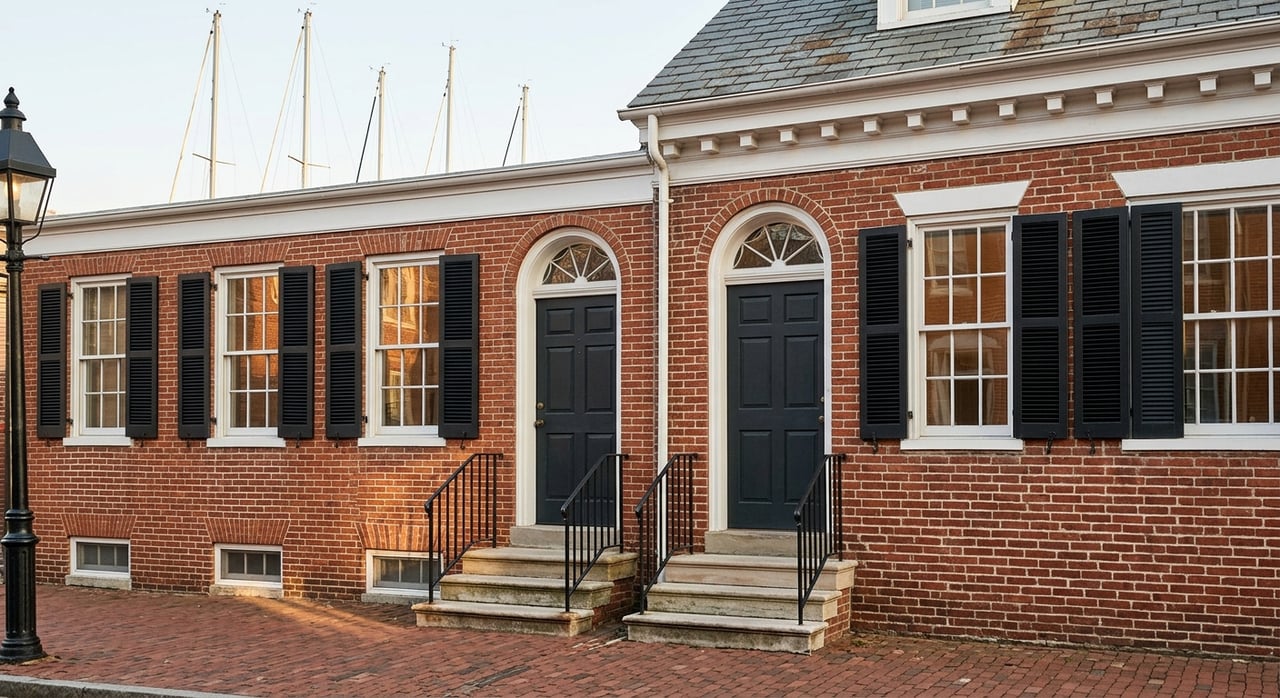
If you want the fullest walkable Annapolis experience, this is the place to start. Main Street, City Dock, Maryland Avenue, and nearby blocks form the city’s strongest car-light zone, with restaurants, shops, galleries, pubs, and music venues clustered in a compact area.
Visit Annapolis describes this district as a walkable core where historic buildings now house many of the businesses and destinations people use and enjoy every day. City Dock is also the historic heart of Annapolis, with many water tours launching from this area.
For buyers, the appeal is simple. You can step outside and feel connected to the energy of town almost immediately, which is a major lifestyle draw for both full-time residents and second-home buyers.
Eastport
Eastport is the other standout option for a car-light lifestyle. Located just across Spa Creek from downtown, it offers close proximity to the core while maintaining a distinct waterfront identity.
According to Visit Annapolis, Eastport is reachable by a short water-taxi ride or a walk over the Spa Creek Bridge from City Dock. The area includes street-end parks, waterfront dining, kayaking access, and a village center around Fourth Street, while the City describes it as the maritime heart and soul of Annapolis.
For many buyers, Eastport strikes a compelling balance. You stay near downtown amenities while gaining a neighborhood setting that feels connected to the water and to Annapolis’ boating culture.
Murray Hill
Murray Hill is worth close attention if you want a quieter residential feel without giving up access to the center of town. In the City’s planning materials, Murray Hill and Eastport are identified as older neighborhoods closest to the core, with interconnected street networks and a pedestrian scale similar to downtown.
That kind of street pattern makes a difference. It tends to support easier walking and a more natural day-to-day connection to nearby destinations, rather than forcing every trip into a car.
The City’s public water access planning also notes that many neighborhood water-access sites are located in Downtown, Murray Hill, and Eastport. For buyers who value access to the waterfront experience, that is part of the neighborhood’s appeal.
Inner West Street and the Arts District
The West Street Arts District is especially attractive if your version of walkability includes dining, arts, nightlife, and local events. Visit Annapolis points to West Street between Church Circle and the Westin as a corridor with dozens of restaurants, galleries, and music venues.
The City describes Inner West Street as an urban-village setting with commercial, professional, cultural, and residential uses. That mix can create a very convenient pattern for daily life, especially if you enjoy being close to activity and want more than just a pretty streetscape.
Monthly festivals and event programming add another layer to the neighborhood’s appeal. In a place like this, leaving the car parked can feel less like a compromise and more like the point.
What daily life looks like without driving everywhere
In central Annapolis, everyday life often shifts from planning every outing around parking to building routines around short walks. You might walk to coffee in the morning, head to dinner without thinking about a designated driver, or spend part of the weekend moving between shops, waterfront benches, and events on foot.
Visit Annapolis highlights Main Street, City Dock, Maryland Avenue, Eastport, and the Arts District as key parts of that walkable experience. The City’s boating information also reinforces the central role of City Dock and Eastport for docking, water access, and water taxi activity.
That does not mean every errand is effortless or that a car becomes irrelevant. It means your default pattern may become more flexible, more local, and more connected to the neighborhood itself.
Transit and trolley options in Annapolis
Transit helps extend your reach beyond what is easiest on foot. The City’s transportation pages list fixed bus routes, a free downtown shuttle, on-demand transit, and the free Current trolley.
The trolley is especially useful for weekend circulation downtown during the spring and summer season. It currently runs Saturdays and Sundays from 11 a.m. to 5:30 p.m. and does not operate in inclement weather.
Annapolis Transit also connects places such as Eastport Shopping Center, West Street, Church Circle, St. Mary’s, and the mall. If you commute toward Washington, MTA Route 220 runs from Annapolis to Washington, D.C., with a downtown stop at West Street and Calvert Street.
For buyers coming from DC or Northern Virginia, that commuter connection may matter. It adds another layer of practicality to an in-town Annapolis purchase, especially if you split time between the city and the capital region.
Parking is still part of the strategy
A car-light lifestyle in Annapolis works best when you are realistic about parking. The City manages downtown parking through garages, meters, and residential permits, and it uses separate parking vendors for the historic district and the rest of the city.
There are also monthly permits, on-street options, and residential parking permits depending on location. In Eastport, a transportation study found that curbside parking demand is high on Saturdays and during events, which helps explain why planning ahead remains part of everyday life.
This is one of the key tradeoffs to understand before you buy. The most walkable neighborhoods often reward flexibility, smaller-lot living, and comfort with a more urban rhythm rather than easy suburban-style parking.
A current City Dock detail to know
If immediate waterfront access is high on your wish list, there is one important timing note. The City says the City Dock resiliency project is underway, and some services and many slips are suspended through early 2028.
That does not erase the long-term appeal of the area, but it does affect the near-term experience. If dockage or direct waterfront functionality is central to your decision, this is the kind of local detail worth weighing early in your search.
Why walkability matters for buyers and resale
Walkability is not just a nice extra for many buyers. It is a real preference that can shape demand.
The National Association of Realtors reports that interest in walkable communities is increasing. Its survey found that more than 30% of Gen Z and Millennial respondents would pay a lot more to live in a walkable community, and 53% of all respondents would prefer an attached dwelling if it meant an easy walk to shops and restaurants.
In Annapolis, that preference intersects with something harder to replicate: a compact historic downtown, adjacent pedestrian-scale neighborhoods, waterfront access, and a dense mix of dining and cultural destinations. That combination gives in-town neighborhoods a lifestyle story that tends to stand out with both local and out-of-area buyers.
How to think about the tradeoffs
The strongest car-light neighborhoods in Annapolis are not low-friction car suburbs. They usually ask you to accept smaller lots, more active streets, event-season congestion, and a parking plan rather than guaranteed convenience at every moment.
For many buyers, that is a worthwhile exchange. You are trading some auto ease for a richer daily experience, stronger connection to place, and the ability to enjoy Annapolis in a more immediate way.
If that is the lifestyle you are after, the first neighborhoods to study closely are Historic Downtown and City Dock, Eastport, Murray Hill, and the Inner West Street Arts District. Each offers a slightly different version of in-town living, but all support a more walkable pattern than most surrounding areas.
When you are comparing homes, it helps to look beyond square footage and finishes. Pay close attention to how each address connects to the streets, shops, waterfront, dining, and transit options you expect to use most.
A truly well-chosen in-town home is not just about the house. It is about how naturally the neighborhood supports the life you want to live.
If you are exploring a move in Annapolis and want thoughtful guidance on which in-town blocks and neighborhoods best match your lifestyle, Liz Dooner can help you evaluate the options with local insight and a refined understanding of what makes each area distinct.
FAQs
Which Annapolis neighborhoods are best for car-light living?
- The strongest options are Historic Downtown and City Dock, Eastport, Murray Hill, and the Inner West Street Arts District because they offer the best combination of walkability, proximity to daily destinations, and access to transit or downtown circulation.
Is it possible to live in Annapolis without driving every day?
- Yes. In central Annapolis, many residents can walk for daily outings, use local transit or the free trolley for some trips, and keep a car mainly for regional errands rather than everyday dependence.
Does Annapolis have public transportation for in-town trips?
- Yes. The City lists fixed bus routes, a free downtown shuttle, on-demand transit, and the free Current trolley, which runs on weekends during the spring and summer season.
Is Eastport walkable to downtown Annapolis?
- Yes. Visit Annapolis says Eastport is a leisurely walk over the Spa Creek Bridge from City Dock, and it is also connected by water taxi.
What should buyers know about parking in downtown Annapolis?
- Buyers should know that garages, meters, on-street parking, monthly permits, and residential permits all play a role, and that parking demand can be high during weekends and events, especially in areas like Eastport.
How does the City Dock project affect waterfront living in Annapolis?
- The City says the City Dock resiliency project is underway, and some services and many slips are suspended through early 2028, which is important to consider if dockage or immediate waterfront access is a priority.
Why does walkability matter for Annapolis home values?
- Walkability matters because buyer demand for easy access to shops, restaurants, and daily amenities remains strong, and Annapolis offers a rare mix of historic character, waterfront access, and pedestrian-scale neighborhoods that can support long-term appeal.