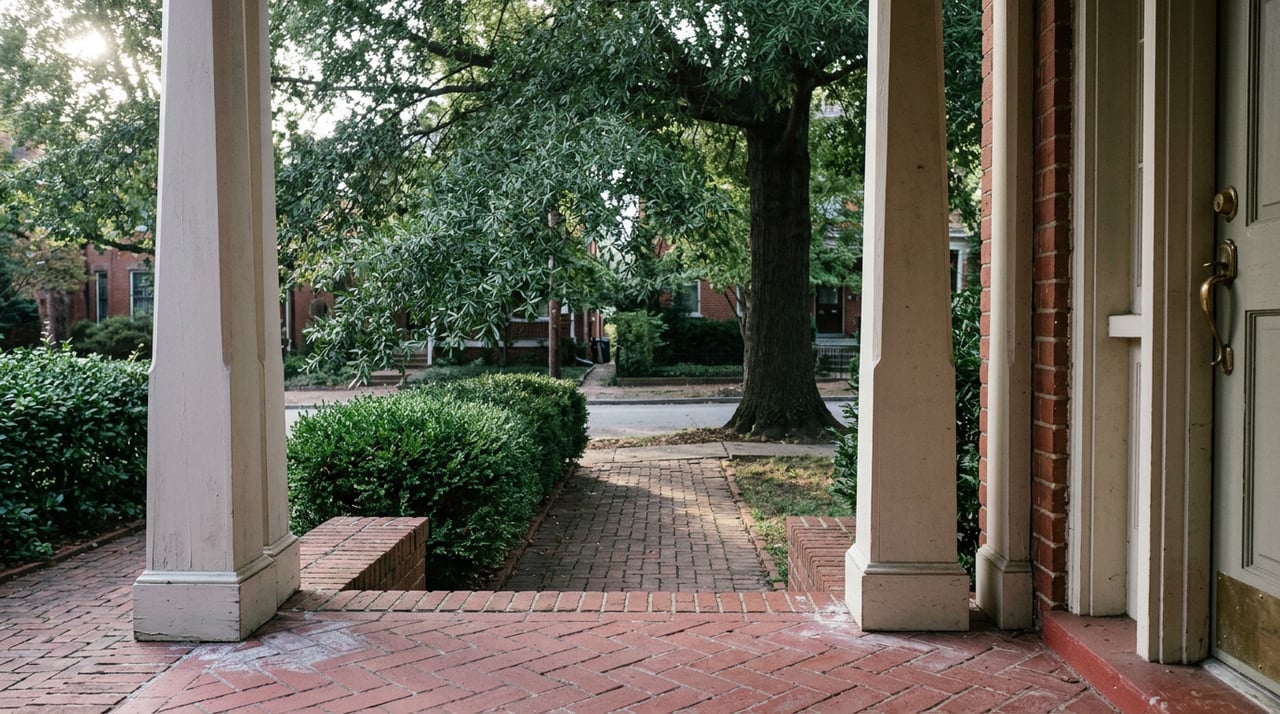
Walk the Poplar Trail on any weekday evening this fall and you will do the same thing everyone else does: step half onto the grass shoulder the moment a cyclist comes the other way. The trail is six feet wide, which sounds fine until you are actually on it with a dog, a stroller, and someone jogging toward you at the same time. That squeeze is not a quirk of the neighborhood. It is the last visible piece of a decision made a generation ago that the City of Annapolis has spent the past six years, and several million dollars in federal grants, trying to undo.
This is the final fall Homewood residents will know the trail in that original form. Construction on its replacement, a wider and considerably longer version called the West East Express, is set to begin this winter, according to the city's own biking trails page. What happens on the other side of that construction is worth understanding now, before the crews and the detour signs show up.
A Rail Bed That Never Got the Upgrade
The Poplar Trail runs about a mile along the old Washington, Baltimore and Annapolis rail line, threading through the Germantown Homewood and Admiral Heights neighborhoods between Taylor Avenue and Admiral Drive. It was built roughly a generation ago on that defunct railroad right of way, and it has quietly become the most heavily used trail in the city. It is also, less obviously, a working piece of the East Coast Greenway, the 3,000-mile pedestrian and bicycle route that runs from Maine to Florida. A trail behind a Homewood backyard is technically part of a route that ends in the Florida Keys.
None of that mattered much when the trail was built for casual neighborhood use. It matters now because the trail has become the only way to get from downtown Annapolis to the Parole area on a bike without riding in traffic on West Street. A local amenity turned into a piece of regional transportation infrastructure, and the infrastructure never got wider to match.
What Six Feet Actually Costs a Cyclist
Six feet is the width of two adults walking shoulder to shoulder, with almost nothing left over. Federal accessibility standards for shared use paths call for ten. The gap between those two numbers is why passing a stroller or a wheelchair on the Poplar Trail today usually means someone stepping off the pavement entirely, and why the city has treated the widening as the trail's actual bottleneck rather than a cosmetic upgrade.
The fix, officially named the West East Express by Mayor Gavin Buckley and known around city hall as the WEE, does three things at once. It widens the existing mile of trail to ten feet. It extends the trail east, following the historic rail alignment past what is now a service road behind the Graduate Hotel, to a new terminus at People's Park next to the Whitmore Garage on Calvert Street, steps from the State and County government buildings downtown. And it extends the trail west from Admiral Drive along West Street to Annapolis Town Center, where it links up with existing paths to Waterworks Park, the Westfield Annapolis mall, and Anne Arundel Medical Center.
Before and After, Side by Side
| Poplar Trail today | After West East Express construction | |
|---|---|---|
| Width | 6 feet | 10 feet, meeting federal shared use path standards |
| Eastern end | Stops at Taylor Avenue near the Annapolis Police Station | Extends to People's Park and the Whitmore Garage in downtown Annapolis |
| Western end | Stops at Admiral Drive | Extends along West Street to Annapolis Town Center, linking to Waterworks Park and Anne Arundel Medical Center |
| Funding | Maintained through routine city repaving | $2.02 million federal Recreational Trails Program grant for the trail widening and east extension, plus $2.75 million from the federal Transportation Alternatives Program for the west extension |
| Regional role | Local shortcut, part of the East Coast Greenway | Spine connecting to Anne Arundel County's South Shore Trail and B&A Trail network |
Once both extensions are built, a Homewood resident could theoretically bike from their front door to People's Park downtown, or out to the medical center and the mall, entirely on separated trail. That does not exist anywhere in the city today.
The Committee That Wrote Its Own Design Brief
The reason this took six years is not bureaucratic drift. It is that the Germantown Homewood Civic Association's Poplar Trail Committee has been in the room for nearly every step of the design, and the city kept coming back to Homewood residents before moving forward.
- February 2022: city staff met with the full GHCA membership to survey residents and gather early input.
- August 2022: the committee ran its own online survey, drawing 150 responses on how residents actually wanted the corridor to feel.
- 2023: a series of meetings walked residents through 30 percent design plans and the forest conservation study that determines which trees along the corridor get preserved.
- January 2024: 30 percent design plans, placemaking exhibits, and forest delineation plans were formally presented at the Michael E. Busch Annapolis Library, a building that sits at the center of the neighborhood the trail runs through.
- February 2025: the 60 percent design plans cleared review by the Maryland Department of Transportation, the forest conservation plan was approved by the city, and a grading permit application went in.
By last year the city counted at least six in-person meetings specifically with Germantown Homewood residents, on top of the survey. The trail that is about to get built was shaped, in a fairly literal sense, by the people who live along it.
That long runway also explains why the project has slipped past earlier target dates more than once. An earlier city planning page had construction on the trail widening and west extension starting in late fall 2025, with the east extension to follow in spring 2026. As of this fall, the city's current biking trails page has moved that target to this coming winter instead. Projects funded through layered state and federal grant cycles rarely move on the first projected date, and this one has already absorbed at least one full construction season of delay while the design and permitting caught up.
In the meantime, the city treated the existing trail as worth maintaining rather than letting it decay while the bigger plan came together. Back in 2021, ahead of the design funding even being secured, Annapolis repaved the existing Poplar Trail as part of a routine neighborhood repaving cycle, a stopgap that kept the trail usable while the real fix was still years from breaking ground.
One More Fall Before the Machines Arrive
For residents who use the trail as part of a daily routine, the practical takeaway is simple. This fall, the trail is fully open and unchanged from the version you have always known: six feet wide, running from Taylor Avenue to Admiral Drive, no detours. Once winter construction starts, expect that to change, likely in phases, starting with the Poplar Trail widening itself before the extensions on either end catch up.
Separately, and already finished, a smaller connector has opened nearby that is worth knowing about now rather than waiting for the bigger project. The McGuckian at Russell Street link ties Homewood directly to the Bates Athletic Complex, the Bates Heritage Complex, and the site of the planned Weems Whalen Field renovation, while also connecting into the Spa Creek Trail and the future West East Express corridor. It is a smaller piece of the same push to stitch Homewood's trails together, and it is usable today.
What looks, on any given evening walk, like a slightly cramped neighborhood path is actually the last unfinished piece of a trail system that has been six years in the making, shaped meeting by meeting by the people who live along it. The narrow stretch you step off of this fall is the version everyone agreed needed to change. This winter, it finally does.
If you are curious how projects like this tend to shape the way buyers think about a neighborhood over time, or just want a straight answer about what is happening on your block, Liz Dooner knows Homewood well enough to walk you through it.